
Key Management Crisis at South Korean Startup Platform
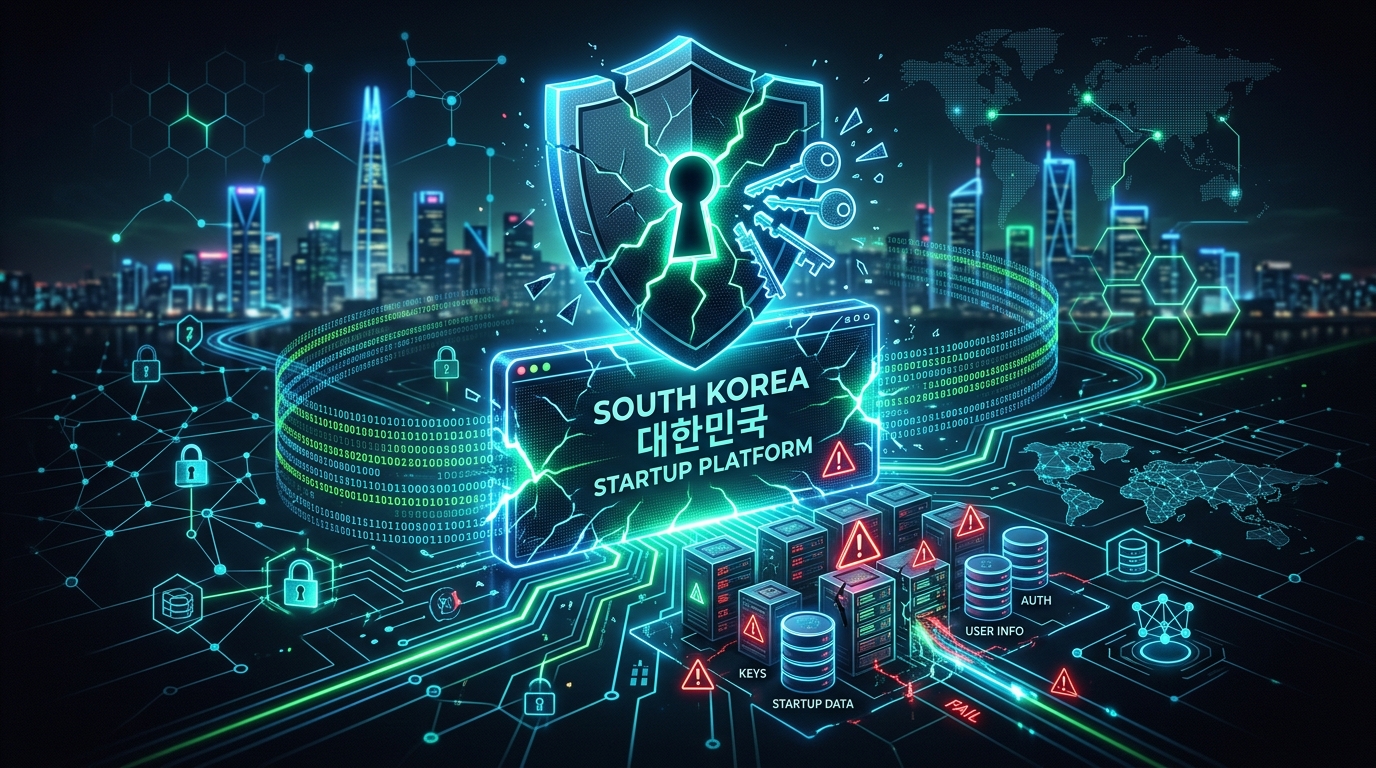
South Korea's government-backed startup platform, 'Modu-ui Changup', exposed the emails and project ideas of approximately 5,000 entrepreneurs by leaking an encryption key along with its API. The incident highlights a critical failure in fundamental cybersecurity architecture.
What Happened
In July, 'Modu-ui Changup' (모두의창업), a state-backed platform supervised by South Korea's Ministry of SMEs and Startups (MSS) to support a nationwide startup audition program, was rocked by a serious data breach. The incident served as a clear example of how even encrypted data can become vulnerable when encryption keys are not properly protected. The platform stored participants' personal information as well as their startup ideas, which are considered trade secrets.
Concerns about the platform had actually been raised a month before the leak. Warnings had been issued that applicants' personal information could be structured and exposed through API responses on the platform. At the time, the government stated it had taken immediate action but did not disclose to the public whether any improvements had been made to the platform's underlying security architecture.
On June 18, the Ministry of SMEs and Startups officially announced that personal information and summaries of startup ideas had been leaked. Following this announcement, a comprehensive investigation was launched in collaboration with the National Intelligence Service, the Cyber Security Center, and the National Police Agency. The results of the investigation became clear on July 31. Authorities confirmed that the definitive cause of the data leak was the exposure of an encryption key through an API. This showed a violation of one of the most basic rules in cybersecurity: the lock and key are never left together.
What Data Was Leaked
The leak directly affected approximately 5,000 successful applicants. The data obtained by the attackers contained highly sensitive and commercially valuable information. The leaked data includes:
- Email Addresses: The contact information of the participants. What is particularly interesting is that even email addresses configured as 'private' in the user interface were exposed in this leak. This indicates that the leak affected the API layer that accesses the system's database, not just the public interface.
- Evaluation Comments: Comments made by the competition jury or evaluators about the projects. As these comments may contain the strengths and weaknesses of the entrepreneurs' ideas, they could provide a strategic advantage to competitors.
- Startup Idea Summaries: Perhaps the most critical data. Summaries of innovative and uncommercialized ideas that entrepreneurs may have worked on for months or even years. The leakage of this information could lead to intellectual property theft and the rapid development of similar projects by rival firms.
How Did the Attack Happen
The most important aspect that distinguishes this data breach from others is that the data was actually encrypted. Under normal circumstances, encrypted data is nothing more than a jumble of meaningless characters without the key. However, in this incident, key management, the weakest link in the security chain, collapsed.
According to the investigation findings, the encryption key required to decrypt the data was packaged together with the API data. The Ministry explained that an external party collected the API data using methods such as 'web crawling' and that the key was also obtained in the process. In other words, the attackers stole a locked safe while also taking the key that was taped to it.
Investigators determined that artificial intelligence-based web crawling techniques may have been used to obtain the email addresses, especially those marked as private. This suggests that the attackers used more sophisticated methods than ordinary data collection tools.
The underlying problem of the incident also highlights the risk of 'hard-coding' encryption keys as fixed values in environments such as application code, configuration files, or databases. When this approach is adopted, the keys themselves are at risk of being exposed along with the systems or data they are supposed to protect. In other words, the root cause of this incident can be seen as a flawed security architecture that failed to incorporate proper encryption key management. Authorities identified 39 IP addresses, all originating from South Korea, that were used to access the leaked information. It was stated that the investigation is ongoing to uncover further details, including possible connections to AI solution providers.
Who Was Affected
Those directly affected by the breach are approximately 5,000 entrepreneurs who participated in and were successful in the national startup competition through the 'Modu-ui Changup' platform. These individuals may be among the country's brightest and most innovative minds. The leakage of their ideas and personal data is not only a privacy violation but also a serious threat to their future business plans, investment searches, and commercial competitiveness.
What You Can Do
If you have applied to this platform and were affected by the breach, there are some precautions you can take:
- Beware of Phishing Attacks: Your leaked email address and startup idea can be used for highly convincing, tailor-made phishing emails. Be wary of fake emails that appear to come from the ministry, investors, or partners.
- Monitor Your Intellectual Property: The fact that a summary of your startup idea has been leaked creates the risk that others may use this idea. Closely follow developments in your industry, newly established companies, and competitor products. Be prepared to seek your legal rights if a project similar to your idea emerges.
- Follow Official Channels: Follow the official statements and guidance from the Ministry of SMEs and Startups (MSS) regarding the incident. Stay informed about the support they may provide or the steps that will be taken.
- Review Your Passwords: Although a password leak has not been reported, it is recommended as a general security measure to change the passwords on other platforms where you use the leaked email address.
What the Company Is Saying
South Korea's Ministry of SMEs and Startups (MSS) confirmed the leak and admitted that the root cause of the incident was the exposure of the encryption key within the API. The Ministry stated that they are conducting a detailed investigation in cooperation with the National Intelligence Service, the Cyber Security Center, and the National Police Agency. They added that as part of the investigation, 39 local IP addresses that accessed the leaked data have been identified and efforts are underway to find the perpetrators.
The Ministry also promised to strengthen its security infrastructure to prevent a recurrence of such an incident. However, the fact that warnings about API security were issued a month before the leak and that the 'emergency measures' taken by the government at the time proved insufficient has also brought criticism of the institution's security approach. When an encryption key is exposed, it is not enough to simply revoke the compromised key and issue a new one. Organizations must also re-encrypt all existing data protected by the compromised key and analyze key access logs to determine the full scope.
Source
This content was generated with AI assistance through our Argus Flow application. We are continuously working to improve Argus Flow; if you encounter any issues such as translation errors, incorrect sources, or unverified information, you can report them using the button below. We appreciate your feedback.