
Average Cost of a Data Breach Rises to $5 Million
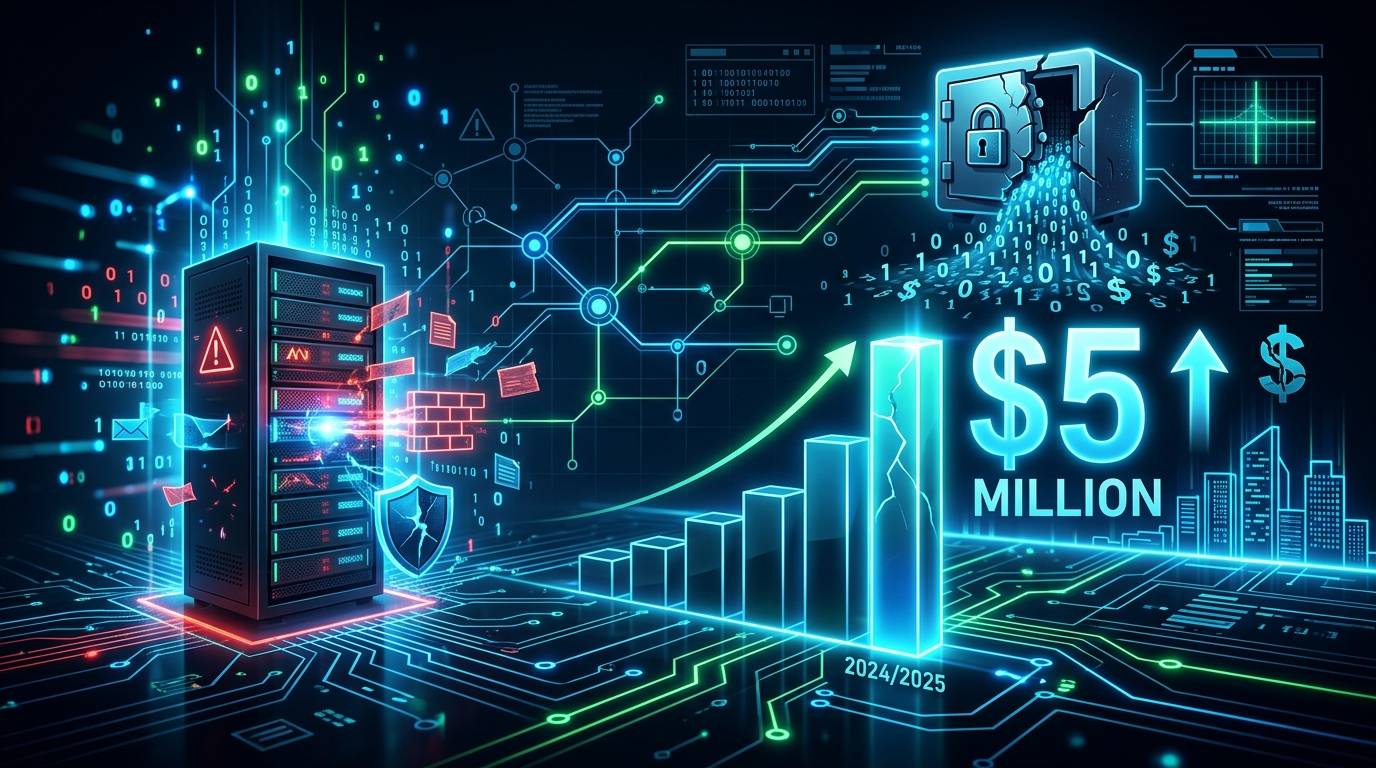
A new report from IBM reveals that the global average cost of a data breach has reached a record high of $4.99 million. According to the report, AI-backed cyberattacks play a significant role in this increase.
What Happened
July 29, 2026 – IBM's "Cost of a Data Breach Report," one of the most anticipated annual analyses in the cybersecurity world, was released today. The 2026 edition carries a stark warning for both corporate executives and security professionals: the global average cost of a data breach has soared to an all-time high of $4.99 million. This figure demonstrates the growing financial impact of cyberattacks, establishing them as an undeniable business risk. Continuing the upward cost trend of previous years, this new record makes it clear that companies must re-evaluate their cybersecurity investments.
One of the most critical factors highlighted in the report is the active use of artificial intelligence (AI) by attackers. AI-backed attacks are cited as a driver that increases both the complexity and the cost of breaches. This signals the beginning of a new era in cybersecurity, where it has become a necessity for defense mechanisms to adapt to this technology. The report emphasizes that this cost is not just about ransom payments or legal fines but also includes indirect costs such as reputational damage, customer churn, system remediation, and business interruption. To understand the risks, it can be a critical step to regularly review Data Breach News sources to track such incidents and stay informed.
Data Compromised
IBM's report is a comprehensive study that analyzes data from hundreds of real-world breach incidents experienced by companies across various sectors worldwide, rather than examining a single data breach event. Therefore, the report does not provide a specific list like "this data was stolen from this company." Instead, it examines the impact of the type of data stolen on the overall cost. For instance, it is a known fact that breaches involving sensitive data such as personally identifiable information (PII), financial data, or health records incur much higher costs than incidents involving less sensitive data. The report statistically demonstrates how factors like legal obligations, regulatory fines, and the erosion of customer trust resulting from the compromise of such data escalate the total cost.
How Did the Attack Happen
The report's summary does not provide technical details or specific vulnerability codes (CVEs) behind the attacks. However, it explicitly states that one of the most significant drivers of the cost increase is "AI-backed attacks." This means that cybercriminals are now using more sophisticated and automated methods. Artificial intelligence provides attackers with advantages in several areas:
- Advanced Phishing Emails: AI can be used to generate highly convincing, grammatically perfect, and personalized phishing emails. These emails can more easily bypass traditional security filters and are more likely to deceive employees.
- Automated Vulnerability Detection: Attackers can leverage AI tools to scan and identify security vulnerabilities in corporate networks or applications much more quickly, allowing them to analyze the attack surface with greater speed.
- Malware Development: AI can be used to create polymorphic malware that constantly changes its code, making it more difficult to detect by existing security software.
While the IBM report does not offer specific vectors on how these next-generation attacks bypass defense mechanisms, it underscores that AI increases the scale and effectiveness of attacks, which is directly reflected in the cost of breaches. This once again highlights the importance of AI-based threat detection and response systems on the defensive side.
Who Are the Victims
The $4.99 million cost calculated in the report represents a global average. This means that virtually all organizations are facing this escalating risk, regardless of their geographical location, industry, or size. However, some sectors inherently face higher costs. The average cost of breaches in highly regulated industries that handle very sensitive data—such as healthcare, finance, energy, and pharmaceuticals—is often well above this figure. Small and medium-sized enterprises (SMEs) are also at significant risk. Although they may not have the same advanced security resources as large corporations, they are frequently targeted as part of the supply chain, and the financial impact of a data breach can be devastating for them.
What You Can Do
In the face of these rising costs and evolving threats, there are proactive measures that both individuals and organizations can take.
For Individuals:
- Check if Your Data Has Been Leaked: Finding out if your personal information has been compromised in past breaches is the first step in determining the precautions you need to take. You can check for leaks associated with your email address using a Data Breach Search service.
- Use Strong and Unique Passwords: Create different, complex passwords (including uppercase/lowercase letters, numbers, and symbols) for each online account. Using a password manager greatly simplifies this process.
- Enable Two-Factor Authentication (2FA): This adds a second layer of security that prevents access to your account even if your password is stolen. It is one of the most effective security measures today.
- Be Wary of Phishing Attacks: Be vigilant against fake emails, especially those crafted with AI. Do not click on links or download attachments from unknown senders.
For Organizations:
- Leverage AI in Security: If attackers are using AI, defenders must too. Utilize AI-powered security platforms (SOAR, XDR) to detect and respond to threats faster.
- Adopt a Zero Trust Architecture: Based on the principle of "never trust, always verify," this model treats every access request as suspicious, requiring continuous authentication from within and outside the network.
- Create and Test an Incident Response Plan: Having a step-by-step plan for what to do in the event of a breach prevents panic and chaos, minimizing cost and damage. This plan should be tested regularly with drills.
- Train Employees: The human factor is often the weakest link. Regular cybersecurity awareness training for employees is one of the best defenses against social engineering attacks like phishing.
What the Company Says
Regarding the report's release, IBM officials stated that the findings once again confirm that cybersecurity is no longer an IT issue but a fundamental business risk. An IBM spokesperson commented, "The $4.99 million average cost we've reached starkly illustrates the devastating impact of cyberattacks on operational and financial stability. The role played by AI-backed attacks in this increase, in particular, shows the urgency for companies to shift from reactive defense models to proactive and intelligent security strategies. Being prepared can significantly reduce the cost of a breach."
Source
https://www.infosecurity-magazine.com/news/cost-of-a-data-breach-5m-ibm/
This content was generated with AI assistance through our Argus Flow application. We are continuously working to improve Argus Flow; if you encounter any issues such as translation errors, incorrect sources, or unverified information, you can report them using the button below. We appreciate your feedback.