
Russian Spy Group Targets West with Zimbra Exploit
A Russian state-sponsored cyber-espionage group known as Laundry Bear is stealing sensitive data from Western countries' government agencies and private companies using a novel zero-day exploit in the popular email software Zimbra. The attack is carried out using a method that only requires opening the email, with no clicks needed.
What Happened
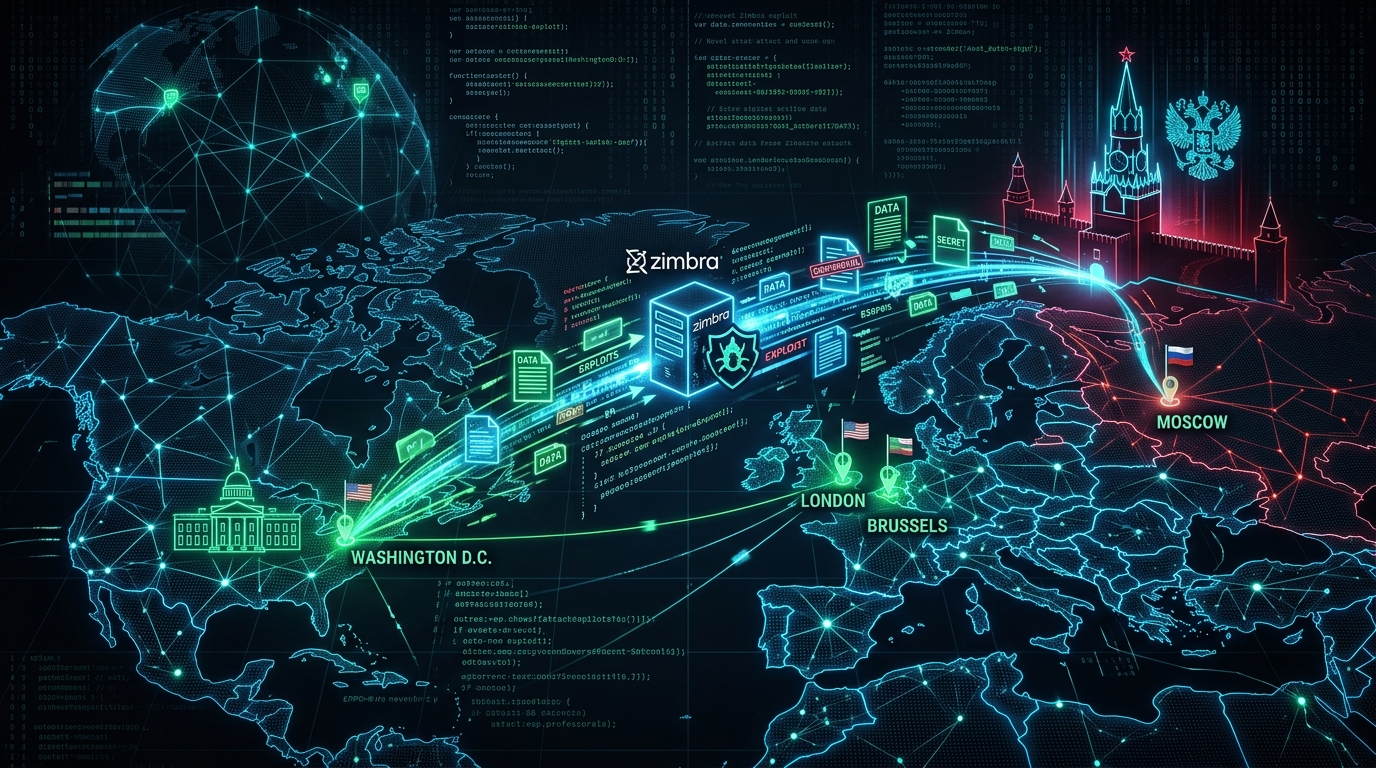
A Russian state-sponsored cyber-espionage group is conducting a large-scale cyberattack campaign targeting governments and companies in critical sectors in Western countries. According to a joint security advisory issued by the cybersecurity authorities of the United States and 16 allied nations, the group, dubbed "Laundry Bear" or "Void Blizzard," is exploiting a previously unknown vulnerability in the popular Linux-based enterprise email software, Zimbra Collaboration Suite. The primary objective of these espionage activities is assessed to be gaining a strategic advantage by accessing sensitive information, rather than financial gain.
According to the report, the attacks began in July 2025, and the group has been leveraging this zero-day vulnerability to infiltrate its targets since then. The patch that closed the security flaw was not released until November 2025. During this five-month window, the attackers had the opportunity to infiltrate numerous systems and steal data without detection. Officials emphasize that organizations that have not updated their systems are still actively targeted by this group and remain at significant risk, even though a patch is available. The fact that the group's activities are ongoing a year after the campaign began highlights the seriousness of the threat.
A statement from the joint security advisory clearly summarizes the gravity of the situation: "The covert and persistent nature of this activity, along with the absence of any known financial extortion, almost certainly indicates this group’s involvement in espionage activities with Russian government backing." This finding confirms that the Laundry Bear group's motivation is entirely focused on intelligence gathering. State support enables the group to conduct more complex and long-term operations.
Data Exfiltrated
The nature of the data exfiltrated by the attackers using this vulnerability clearly reveals the purpose of their espionage activities. The attack, triggered merely by viewing an email, does not require the victim to click any links or download attachments. Following a successful infiltration, the information Laundry Bear gains access to is extensive and critically sensitive:
- Last 90 Days of Email Archive: The attackers exfiltrate all email correspondence from the victim's account for the past three months. This provides them with in-depth knowledge of projects, strategic plans, personal communications, and internal corporate dynamics.
- Account Password: The victim's Zimbra account password is stolen. If this password is reused on other platforms, it could open the door for attackers to access other systems as well.
- Search History: The entire search history within the email account is compromised. This data is a valuable source of intelligence, revealing what topics, individuals, or projects the victim is focused on.
- Corporate Email Directory: Access is gained to the entire email directory of the victim's organization. This directory is then used to compile a list of potential targets for future phishing attacks.
- Two-Factor Authentication (2FA) Tokens: The attackers can steal two-factor authentication tokens associated with the account. This allows them to bypass the additional security layer of 2FA and gain full control of the account.
- Newly Created Passwords: Any new passwords created or changed in the account after the compromise can also be stolen. This ensures the attackers maintain access even if the victim realizes there is an issue and changes their password.
How the Attack Was Executed
The methods used by Laundry Bear in this operation demonstrate the group's advanced technical capabilities. The attack chain consists of carefully crafted steps targeting select victims. First, the group identifies target organizations from publicly available sources. After confirming that these organizations use a Zimbra server, they compile email addresses of employees within those organizations.
The key to the attack is the zero-day vulnerability, tracked as CVE-2025-66376. This vulnerability is triggered when the victim opens a specially crafted phishing email. The email contains a custom JavaScript payload that executes without any user interaction. As the email client renders the message, this code runs automatically, allowing the attackers to gain initial access to the system. This "no-click" attack vector is extremely dangerous as it leaves even the most cautious users vulnerable.
Officials state that the attackers developed a custom capability, dubbed "beehive," for data collection and exfiltration. This mechanism is believed to efficiently package the stolen data and send it to servers controlled by the attackers. The report also warns that this "beehive" capability could likely be adapted to exploit other vulnerabilities. The fact that the vulnerability was rated with a medium severity score of 6.1 on the Common Vulnerability Scoring System (CVSS) is another testament to how misleading it can be for defenders to prioritize patching based on severity scores alone.
Who Was Affected
The target list for this espionage campaign is quite broad. The victims are not limited to government agencies. Laundry Bear has targeted public and private organizations across numerous strategically important sectors. These include defense, education, energy, law enforcement, media, finance, transportation, and technology. A specific list of affected organizations or a clear geographical breakdown of the attacks has not yet been shared with the public.
Another noteworthy point is the group's attack strategy. According to the officials' report, as a growing trend among Russian cyber threat groups, this attack was first tested on Ukraine before being deployed against Western countries and NATO allies. This indicates that Ukraine is used both as a priority target and as a testing ground for new cyber weapons and techniques.
The countries that issued the joint advisory highlight the global dimension of the threat. The signatories include the United States, Australia, Canada, New Zealand, the United Kingdom, the Czech Republic, Denmark, Estonia, Finland, France, Italy, Moldova, the Netherlands, Poland, Spain, and Sweden.
What You Can Do
Authorities are urging organizations to take immediate steps to protect themselves against this threat. Taking the following measures is critical to ensuring systems are secure:
- Update Immediately: All organizations using Zimbra Collaboration Suite must install the patch for CVE-2025-66376 and all subsequent security updates without delay. It is vital for servers, especially those with public-facing infrastructure, to be up-to-date.
- Use Indicators of Compromise (IOCs): The security advisory shared technical indicators associated with the attackers. Security teams should use these IOCs (IP addresses, file hashes, etc.) to conduct a retrospective scan of their networks and systems to check for any signs of a breach.
- Conduct Advanced Threat Hunting: Due to the covert nature of the attack, it may not have been detected by standard security tools. Organizations are advised to conduct proactive threat hunting by analyzing network traffic, email server logs, and anomalous user behavior.
- Review Access Controls: Reviewing the permissions of accounts with access to the corporate email directory and other sensitive data and reconfiguring them according to the principle of least privilege can reduce risk.
What the Company Says
The joint security advisory and the source article do not include a statement from Zimbra, the software developer, regarding this specific espionage campaign. However, the company released the security patch that addresses the vulnerability CVE-2025-66376 in November 2025. Users are advised to update their systems as soon as possible.
Source
This content was generated with AI assistance through our Argus Flow application. We are continuously working to improve Argus Flow; if you encounter any issues such as translation errors, incorrect sources, or unverified information, you can report them using the button below. We appreciate your feedback.