Cyberattack on Japanese Food Giant Freezes Supply Chain
A ransomware attack on a Japan-based food and logistics firm has brought the supply of frozen food to a standstill for thousands of clients, including major franchises like Kentucky Fried Chicken.
What Happened
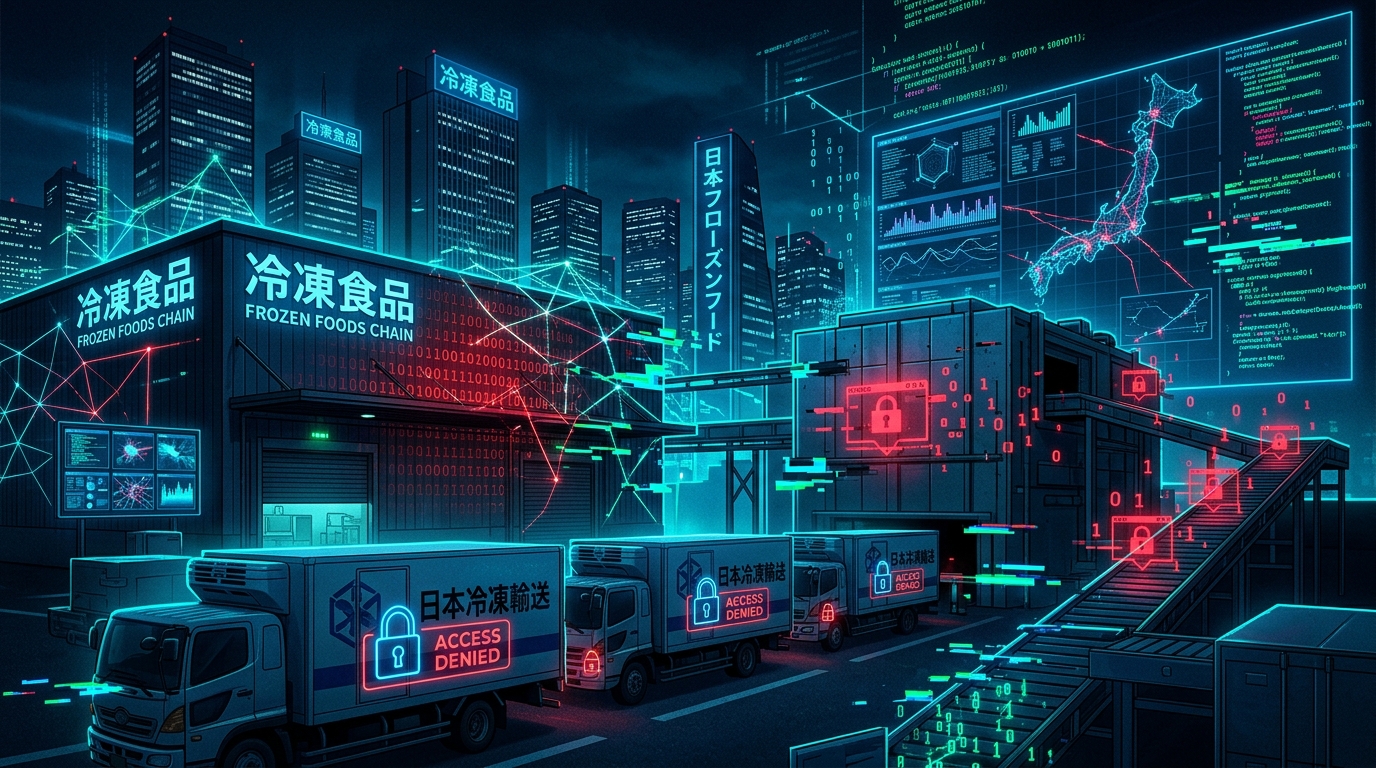
Japan's food supply chain was shaken by a major cyberattack that came to light on July 23, 2026. One of the country's leading food and logistics firms fell victim to a sophisticated ransomware attack targeting its operations. The attack paralyzed the company's digital infrastructure, completely halting critical processes such as the storage, management, and distribution of frozen food products. This immediately triggered a logistics crisis, causing disruptions in shipments to thousands of clients served by the firm.
Ransomware attacks are a type of cybercrime where criminals infiltrate an organization's systems, encrypt vital data, and demand a ransom to make the data accessible again. In this case, the attackers targeted the servers and systems that ensure the logistics firm's operational continuity, rendering the company unable to perform its most basic functions. The lockdown of digital systems for order management, inventory tracking, route planning, and invoicing led to a real-world standstill, with trucks unable to leave warehouses and products failing to reach shelves. This incident once again demonstrates that cybersecurity breaches are no longer confined to the digital world but can directly impact physical infrastructure and daily life.
The timing and target of the attack also highlight the fragile and interconnected nature of modern economies. Targeting a fundamental sector like food and logistics carries the potential not only for economic losses but also for disruptions to essential public services. There is currently no clear information on when the company's operations will return to normal. This uncertainty is a significant source of concern for other stakeholders in the supply chain.
Data Compromised
No official statement has been made regarding whether the cybercriminals exfiltrated any data before encrypting the systems. Many of today's ransomware attacks employ a tactic known as "double extortion." In this method, attackers not only encrypt data but also copy sensitive information to their own servers. They then threaten to leak this data publicly or sell it on the dark web if the ransom is not paid.
It is currently unknown if the double extortion method was used in this attack. If a data breach did occur, the types of information at risk could be extensive. A logistics firm's systems typically contain critical data such as customer lists, shipment details, billing information, commercial contracts, employees' personally identifiable information (PII), and financial records. The disclosure of trade secrets like the operational details, supplier information, and pricing strategies of major chains like Kentucky Fried Chicken could mean additional devastation for both the logistics firm and its clients. The company has not yet shared with the public whether it is investigating data breach allegations or if it has found any evidence of one.
How Did the Attack Happen
The technical details of the attack, including the initial access vector and the specific strain of ransomware used, have not yet been disclosed. The company and the cybersecurity experts investigating the incident may be keeping this information confidential to protect the integrity of the investigation. In such incidents, initial access is often gained through methods like phishing emails, exploitation of software vulnerabilities, weak or stolen remote access credentials (like RDP), or infiltration via a third-party supplier.
However, there is no evidence or official statement on which method was used in this specific incident. Details such as how long the attack was ongoing or how long the cybercriminals remained undetected within the network also remain unclear. The sharing of such critical information is typically possible only after a comprehensive digital forensics investigation is completed.
Who Is Affected
While the direct victim of the attack is the Japanese food and logistics firm, the effects have rippled out to impact a much wider audience. According to sources, thousands of clients have been negatively affected. These clients include major restaurant chains such as the global brand Kentucky Fried Chicken (KFC). This situation is a concrete example of how an attack on a single company can affect an entire ecosystem.
Franchises like KFC are heavily reliant on a "just-in-time" delivery model to ensure smooth operations. The collapse of their logistics partner's systems means that frozen chicken and other products cannot reach the restaurants on time. This can lead to menu shortages, loss of sales, and customer dissatisfaction. Thousands of small and medium-sized restaurants, cafes, and food vendors may be experiencing similar supply shortages. The final link in the chain, indirectly affected, is the consumers. The temporary unavailability of certain products at a favorite restaurant shows just how broad the reach of this cyberattack is.
What Can You Do
This incident offers lessons for both individuals and organizations.
- For Consumers: In situations like this, be aware that you may experience temporary product shortages at your favorite restaurants or markets. It is important to be patient until the supply chain issues are resolved. Also, be wary of phishing emails or messages that use this event as a lure, offering fake "compensation" or "discounts." Never click on suspicious links or share your personal information.
- For Businesses (Especially in the Supply Chain Sector): This attack is a wake-up call for all businesses. Review your own cybersecurity posture. Ensure you are regularly making offline and air-gapped backups of your critical data. Update and test your incident response plan with drills. Enforce multi-factor authentication (MFA) on all critical systems. Make phishing awareness training for your employees an ongoing process.
- For Cybersecurity Professionals: This event proves once again how critical infrastructure sectors like logistics and supply chain are prime targets. It is necessary to prioritize projects aimed at strengthening the security of the operational technology (OT) and information technology (IT) infrastructures of firms in these sectors.
What the Company Is Saying
As of the publication of this article on July 23, 2026, the affected food and logistics firm has not yet issued a detailed public statement. No official information has been shared regarding their system recovery efforts, whether they are collaborating with law enforcement, or if they are considering paying the ransom demanded by the attackers. It is common for companies to limit communication during such crises, but a statement is expected soon to address the uncertainty in the supply chain.
Source
https://www.darkreading.com/cyberattacks-data-breaches/ransomware-attack-japanese-frozen-food-chain
This content was generated with AI assistance through our Argus Flow application. We are continuously working to improve Argus Flow; if you encounter any issues such as translation errors, incorrect sources, or unverified information, you can report them using the button below. We appreciate your feedback.