
Texas Government Breach Leaks 3 Million Driver's Licenses
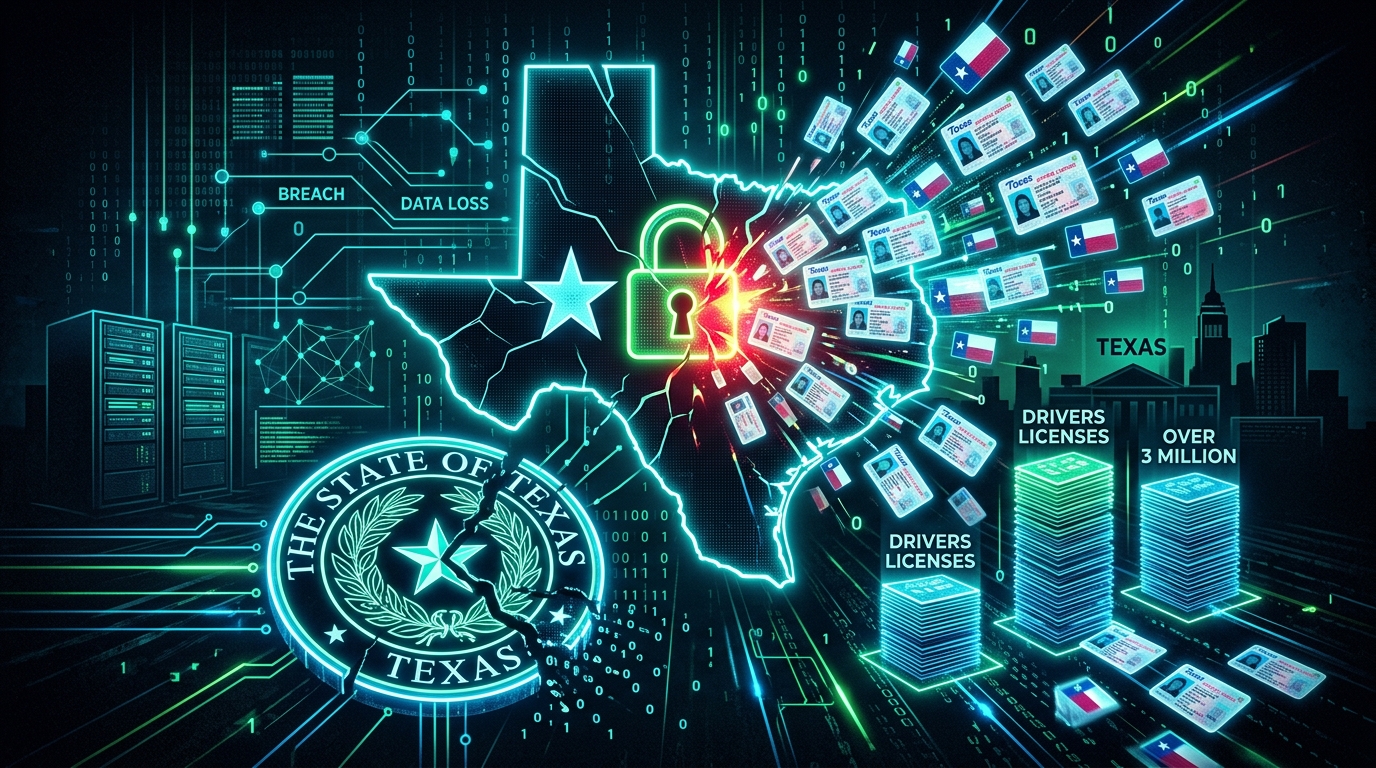
A data breach at a licensing system vendor for the Texas Parks and Wildlife Department (TPWD) has exposed the personal information of over three million individuals. Leaked data includes driver's licenses and Social Security numbers.
What Happened
A concerning development has unfolded for residents of Texas. The Texas Parks and Wildlife Department (TPWD) announced a major data breach at an external vendor company that manages its licensing systems. The incident directly affects millions of Texans who have purchased hunting and fishing licenses. According to the official statement from TPWD, the data of more than three million individuals was compromised in this breach. This figure highlights the severity of the event and the vast scope of its potential impact. The fact that the breach occurred not within TPWD's own systems but in the infrastructure of a business partner underscores the significant risk posed by supply chain attacks in today's cybersecurity landscape. Even if organizations maintain stringent security measures, a vulnerability in one of their third-party vendors can create a domino effect, putting the data of millions at risk. TPWD stated that upon discovering the situation, they contacted federal law enforcement and launched a comprehensive investigation into the incident. However, critical details such as when the breach exactly began and how long the attackers remained in the system have not yet been shared with the public. Initial notifications in such cases often contain limited information, with more details emerging as the investigation progresses. For now, the known fact is that the personal information of a very large group of people involved in hunting or fishing in Texas may have fallen into the hands of cybercriminals.
The Data Exposed
What makes this breach particularly dangerous is the nature of the data that was compromised. The information obtained by cybercriminals is a veritable treasure trove for identity theft and fraud. According to TPWD's announcement, the leaked data set includes the following sensitive information:
- Full Name: As the first step in identity verification processes, this information, when combined with other data, forms the basis for targeted phishing attacks.
- Physical Address: This information, revealing where victims live, can be used to make fraud scenarios more convincing. In some cases, it can even pose a physical security risk.
- Date of Birth: A critical piece of information used as a security question in many areas, from banking transactions to government inquiries.
- Texas Driver's License Number: This is perhaps one of the most alarming parts of the breach. It can be used in the creation of fake IDs, in vehicle rental scams, or to conduct fraudulent official transactions in a person's name.
- Social Security Number (SSN): The compromise of an SSN, the most critical piece of identity information for an individual in the United States, opens the door to full-blown identity theft. Criminals can use this number to apply for credit cards, open bank accounts, commit tax refund fraud, and even apply for government benefits in someone's name.
The fact that all this data was leaked together exponentially increases the risk. Criminals refer to such comprehensive data sets as "fullz" and sell them on dark web marketplaces. The theft of not just a person's name and address, but also their most critical identity verification details like driver's license and Social Security number, can leave victims dealing with financial and legal problems for years to come.
How the Attack Happened
At present, the technical details of the attack are quite limited. TPWD and the affected vendor have refrained from providing specific information on how the attack was carried out. The official statement mentions that the incident occurred as a result of "unauthorized access" to the vendor's systems. This is a general term often used to describe situations where a vulnerability was exploited or credentials were compromised. Technical details, such as whether the attackers used an SQL injection, stole an employee's credentials through phishing, or exploited a zero-day vulnerability in the system, remain unknown. As the investigation, which includes federal law enforcement, is ongoing, it is understandable that officials are not sharing more details at this stage. Typically, more definitive information regarding the root cause of the attack is released to the public once such investigations are complete or reach a certain milestone. However, the only thing known for sure right now is that the attack originated not in the Texas government's own networks, but in the systems of a company providing services to them.
Who Is Affected
Those directly affected by the data breach are the more than three million individuals who have purchased a hunting or fishing license from the Texas Parks and Wildlife Department. This covers a broad audience of people in Texas who are interested in these outdoor activities. The affected individuals may not be limited to current license holders; those who purchased licenses in previous years but do not have an active one now could also be at risk. TPWD has announced that it has begun directly notifying the affected individuals. If you live in Texas and have purchased such a license in the past, it's wise to be vigilant for any official notifications that may be sent to you. These notifications are usually sent via email or postal mail. However, it's also important to remember that scammers may take advantage of this situation by sending fake notification emails. Therefore, the safest approach is to get information by visiting the official TPWD website directly, rather than clicking on links in incoming emails.
What You Can Do
If you believe you have been affected by this breach or have received a notification, you need to act immediately to protect your identity and financial information. Here are the steps you can take:
- Activate the Credit Monitoring Service: TPWD has announced that it is offering 12 months of free credit monitoring services to all individuals affected by the breach. The notification you receive will include instructions on how to activate this service. This service will alert you to any suspicious activity on your credit report, such as a new credit card application made in your name.
- Freeze Your Credit Reports: A credit monitoring service alerts you, but it doesn't prevent fraud. For a more proactive step, consider freezing your credit reports with the three major credit bureaus (Equifax, Experian, and TransUnion). A credit freeze prevents anyone from opening a new credit account in your name without your permission. This process is free and is one of the most effective methods of protection.
- Place a Fraud Alert: If a credit freeze seems too restrictive for you, you can at least place a fraud alert. This alert requires lenders to take extra steps to verify your identity before opening an account in your name.
- Monitor Your Accounts: Regularly review your bank and credit card statements. Report any transactions you don't recognize or find suspicious to your bank immediately.
- Be Wary of Phishing Attacks: Cybercriminals may use your leaked information to send you personalized phishing emails or text messages. These messages may appear to come from legitimate institutions like TPWD or your bank. Do not trust any message that asks for your password, PIN, or other sensitive information.
What the Company Is Saying
In announcing the incident to the public, the Texas Parks and Wildlife Department has tried to maintain a transparent stance. A statement from the agency said, "We take the privacy and security of our customers' information very seriously. We are deeply sorry for the concern and inconvenience this incident has caused." TPWD specifically emphasized that the breach did not occur in its own systems but at a licensing system vendor they use. They also stated that they are investigating the incident in collaboration with federal law enforcement and are taking steps to protect the affected individuals. The primary step is the 12 months of free credit monitoring service offered to the victims. The agency added that they have initiated the process of notifying affected individuals and that more details will be shared in the coming days. The name of the vendor company has not yet been disclosed to the public, likely to protect the integrity of the ongoing investigation.
Source
This content was generated with AI assistance through our Argus Flow application. We are continuously working to improve Argus Flow; if you encounter any issues such as translation errors, incorrect sources, or unverified information, you can report them using the button below. We appreciate your feedback.