
Maine Shuts Down Data Breach Portal Over Fake Submissions
The Maine Attorney General's Office has suspended its data breach notification portal, established after a massive breach last year, due to a flood of fake and misleading submissions by unknown actors. The move has caused further concern for 1.3 million affected residents.
What Happened
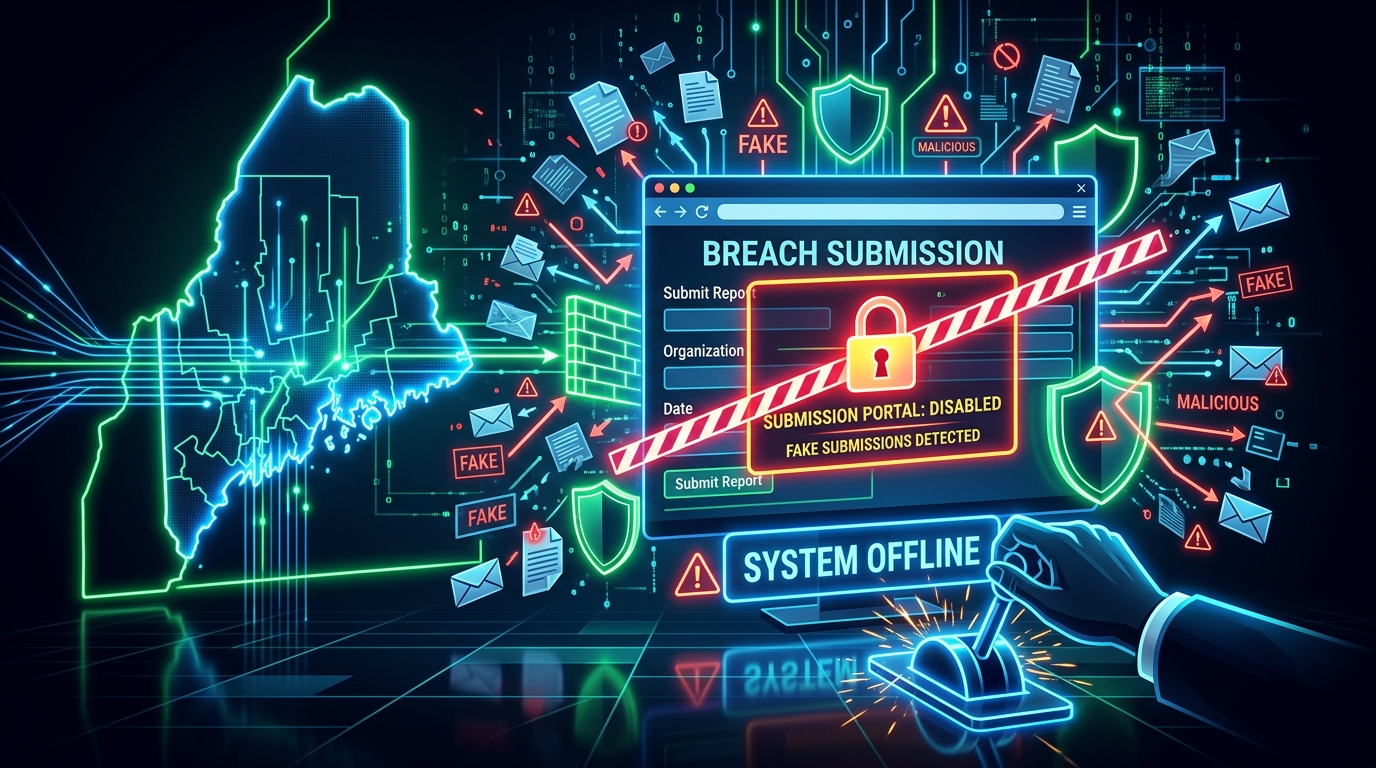
Things can get strange in the world of cybersecurity. Sometimes, the very step you take to solve a problem can ignite another one. What happened in the state of Maine is a perfect example of this. The Maine Attorney General's Office was forced to suspend the online portal it had set up for citizens to check if they were affected by a major data breach. The reason is quite ironic: the portal was being intentionally flooded with fake data breach submissions by unknown individuals.
At the heart of the issue is a massive data breach from last year that affected approximately 1.3 million Maine residents. This breach targeted state government systems. In the aftermath of this huge leak, officials set up a data breach notification portal to assist citizens and provide transparency. In theory, this portal was a great idea. Citizens could enter their personal information to find out what data of theirs had been leaked and take necessary precautions. But things didn't go as planned.
Unidentified actors targeted this well-intentioned system. They began submitting fake data breach notifications to the portal on behalf of non-existent companies. Even worse, in these fake submissions, they used the real personal information of Maine citizens that was stolen in the massive 2023 breach. This meant that when a Maine resident went to the portal to check their information, they were met with a notification about a breach from a company they'd never heard of, a breach that never actually happened. This, naturally, led to immense confusion and panic. People began to wonder if their data, already stolen once, was now being leaked from other places as well.
Faced with this deliberate disinformation campaign, the Maine Attorney General's Office made the radical decision to disable the portal entirely. A statement explained that the portal was being filled with "false and confusing information" and that this was beginning to cause more harm than good to the citizens it was meant to protect. Shutting down the portal, on one hand, stopped the spread of fake notifications, but on the other, it cut off the primary channel for millions of affected people to access information.
Data Compromised
It's important to be clear here: this new incident that led to the portal's shutdown did not involve a new data breach. The problem was the misuse of data that had already been stolen in the major 2023 breach. Therefore, the data at risk is the same data that was compromised in that initial incident.
So, what data was exposed in that leak? The list is quite long and contains sensitive information. The following critical information of the 1.3 million affected Maine residents fell into the hands of cybercriminals:
- Social Security Numbers (SSN): This is perhaps the most critical type of data. An SSN is a fundamental piece of information used to verify a person's identity and can be used for fraudulent activities, such as opening fake credit accounts or illegal employment attempts.
- Driver's License or State ID Numbers: These numbers also play a key role in identity theft. They can be used to create fake IDs, have traffic tickets issued in your name, or even impersonate you in legal proceedings.
- Dates of Birth: When combined with other personal information, a date of birth is often used to verify a person's identity or answer security questions.
- Taxpayer Identification Numbers: This information opens the door to serious financial fraud, such as filing fraudulent tax returns in your name.
- Medical Information and Health Insurance Information: This type of data is extremely private. Scammers can use this information to receive medical services in your name, file fraudulent insurance claims, or even blackmail you.
The use of this data in fake notifications represents a double blow for the victims. People already living with the stress of their data being stolen now see that same data being used as a disinformation weapon against them.
How Did the Attack Happen
It's best not to think of this incident as a classic cyberattack. No complex code or exploit was used here. The attackers didn't exploit a vulnerability in the system, but rather its logic and purpose. While the full technical details haven't been disclosed, the process of the incident, based on the source report, can be summarized as follows:
The attackers first had access to the database obtained from the massive 2023 Maine breach. This database contained the sensitive information of 1.3 million people. They then analyzed how the Maine Attorney General's data breach notification portal worked. The portal likely allowed companies or organizations to report data breaches as a legal requirement. The attackers accessed this system and created fake notifications on behalf of companies that either didn't exist or had no connection to the incident. For example, they might file a notification for a fictitious company called "X Market" claiming, "Our customer data has been breached." The most crucial part was adding the names, SSNs, and other details of real Maine citizens from their stolen database to the "affected individuals" list of this fake notification. As a result, the system processed this fake submission as a real event and sent out alerts to the relevant people.
This is a form of psychological operation. The goal is to undermine trust in the system, waste the authorities' resources, and, most importantly, spread fear and panic among a population that is already victimized. As a citizen, you already know your data has been stolen. But imagine then receiving a constant stream of new breach notifications from dozens of different places you've never even heard of. It would make managing the situation impossible and create an environment of profound distrust.
Who Is Affected
We can divide the group affected by this incident into several categories:
1. Maine Residents: The primary victims are the 1.3 million Maine residents affected by the 2023 breach. These people, already dealing with the theft of their data, now have to cope with the confusion and anxiety created by fake notifications. They have lost trust in the portal and are left unable to distinguish between true and false information.
2. The Maine Attorney General's Office and State Officials: These institutions are also victims. A support mechanism they established in good faith was turned into a weapon against them. Managing the portal, investigating fake submissions, and now shutting down and reconfiguring the system all lead to a significant waste of resources and time. Furthermore, the incident damages the institution's public reputation.
3. The General Public: Incidents like this erode public trust in official institutions and digital services in general. Citizens begin to question whether even the cybersecurity tools provided by the government are secure. This lack of trust can make it harder for the public to cooperate with authorities during future, real data breaches.
What Can You Do
If you live in Maine and are affected by this situation, there are steps you can take without panicking. The portal is no longer operational, so your channels for information are limited, but you can still do things to protect yourself.
- Follow Official Channels: The official website and press releases of the Maine Attorney General's Office are your most reliable sources of information. Do not trust information you see on social media or in suspicious emails. Be patient until officials announce a new solution or method of communication to replace the portal.
- Freeze Your Credit Reports: If you are certain your data has been stolen, the most effective measure is to contact the three major credit bureaus—Experian, TransUnion, and Equifax—and freeze your credit reports. This prevents new credit or card applications from being made in your name without your permission.
- Disregard Suspicious Notifications: If you received a breach notification from a company you've never heard of before the portal was shut down, ignore it for now. It was likely part of the fake notification campaign.
- Monitor Your Accounts: Regularly check your bank accounts, credit card statements, and other financial accounts. If you see any transaction you don't recognize, contact the relevant institution immediately.
- Use Third-Party Tools: While the official portal is down, you can use trusted platforms to check if your email address or phone number has appeared in other leaks. For example, a Data Breach Search service can help you find out which breaches you've been a part of. This is also a good step for your overall digital hygiene.
What Does the Company Say
In this case, it's more accurate to say "what the state agency says" instead of "company." The office of Maine Attorney General Aaron Frey issued a statement on the matter. The statement was clear and summarized the situation well. The AG's office confirmed that the portal was "being intentionally targeted by an unknown party with false and misleading information." It was noted that this action was intended to "create confusion and fear among citizens."
The statement emphasized that the reason for temporarily disabling the portal was to protect the public from this misinformation. Officials stated they are working to make the portal secure and reliable again. Their plan is to add a verification process for organizations wishing to submit a notification. This is intended to ensure that only verified, legitimate companies and institutions can send data breach reports through the system. However, no specific date was given for when this new system will be launched.
This move by the Attorney General's office highlights the delicate balance they are trying to strike between transparency and security. On one hand, they want to inform the public, but on the other, they must prevent that very channel of information from being abused. This incident once again demonstrates that the battle in cybersecurity has social and psychological dimensions, not just technical ones.
Source
https://www.securityweek.com/maine-disables-data-breach-portal-due-to-fake-submissions/
This content was generated with AI assistance through our Argus Flow application. We are continuously working to improve Argus Flow; if you encounter any issues such as translation errors, incorrect sources, or unverified information, you can report them using the button below. We appreciate your feedback.